







- 中文
- English
What is the meaning of vector control, and the advantages and disadvantages of vector control
Click:
Time:2022-05-12 10:10:41
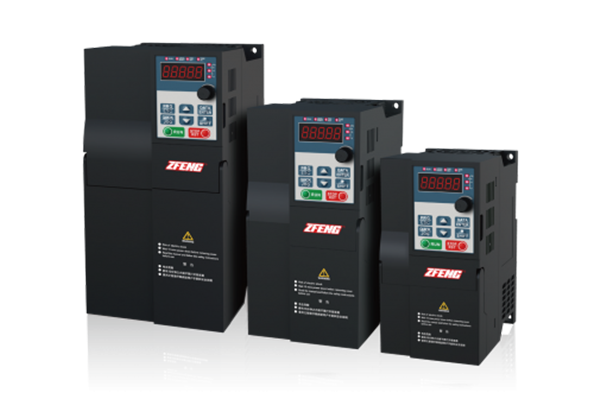
ZF3000 series inverter is high performance vector control, a lot of customers do not understand what is vector control, today I gave you some basic concepts about vector control and the original, I hope it can help bring you.

Vector control principle
Vector is a closed-loop vector control with an encoder, where the speed feedback is obtained through the encoder. Vector control specifically refers to the decomposition of the stator current vector of an asynchronous motor into the current component that generates the magnetic field (excitation current) and the current component that generates the torque (torque current) and control the amplitude and phase between the two components simultaneously, i.e. control the stator current vector, so this control method is called vector control method.
Simply put, vector control is to decouple the magnetic chain from the torque, which facilitates the design of separate regulators for both to achieve high performance speed regulation of AC motors. This allows a three-phase asynchronous motor to be controlled equivalently as a DC motor, thus obtaining the same static and dynamic performance as a DC speed control system.
Features of vector control.
Speed can be reduced to 0 Hz in closed loop (stationary state)
Constant torque can be maintained over the rated speed range
Compared to speed control without encoder, the dynamic characteristics of the drive are significantly improved due to the direct measurement of the speed and the integrated modeling of the current components.
Higher speed accuracy
Advantages of vector control
Dynamic high-speed response, low-frequency torque increase, and flexible control.
Specifically, the stator current I1 and phase ф are controlled simultaneously, and the torque response is very good and accurate. Excitation current Im=I1cosφ, torque current I2=I1sinφ, motor torque=KImI2. voltage vector: a method to control the voltage of motor magnetic field and torque. If the stator circuit of the motor is 100% known
Advantages of vector control
Dynamic high-speed response, low-frequency torque increase, and flexible control.
Specifically, the stator current I1 and phase ф are controlled simultaneously, and the torque response is very good and accurate. Excitation current Im=I1cosφ, torque current I2=I1sinφ, motor torque=KImI2. voltage vector: a method to control the voltage of motor magnetic field and torque. If the stator circuit of the motor is 100% known
Disadvantages of vector control
By rotor magnetic chain orientation, the stator current excitation component and torque component are decoupled, and closed-loop current control is required. The rotor magnetic chain system is controlled by a stable inertia link and can be controlled by either closed-loop or open-loop control of the magnetic chain.
By rotor magnetic chain orientation, the stator current excitation component and torque component are decoupled, and closed-loop current control is required. The rotor magnetic chain system is controlled by a stable inertia link and can be controlled by either closed-loop or open-loop control of the magnetic chain.

点击右上角
分享给朋友吧







 Long by picture save/share
0
Latest News
-

ZFENG Global Distributor Recruitment
-
Fragrant rice dumplings, good health at the Dragon Boat Festival!
-
To improve the business ability, Everest conducts professional knowledge training on air compressors
-
Want to be a distributor dealer, there is an investment policy?
-
Can you provide VAT invoices and how many points?




©2022 ZFENG All Rights Reserved.
Powered by V网平台
Guangzhou Zhufeng Electric Co., Ltd.
ZFENG is a high paid modern enterprise integrating design, R & D, manufacturing and sales. The company has rich brands, and its products include power frequency screw air compressor,permanent magnet screw compressor, horizontal two-stage and super one-stage energy efficiency compressor, oil-free compressor, purification equipment, air storage tank and other parts. The company selects the combined spare parts of international famous brands, combines the world-class German mechanical technology, and provides you with high-quality products with the characteristics of energy saving, high efficiency, durability and low noise through (ERP) scientific management, exquisite manufacturing and strict testing.
TEL: +86 020-28008901
点击右上角
分享给朋友吧

 WhatsApp